Chan Tapping His Way Back To The Top

The first sight of three-time world champion Patrick Chan in comeback mode after a year off was this: performing to “Mack the Knife” in a chilly Vaughan arena, his opening pass was a wonder, with his patented big strokes, a big hop, his body flying, his arms spread out and up. He filled the rink with that opening pass. It was as if he was announcing, with his body movement: “Here I am. It’s me. I’m back.”

And back with a difference.

How so? He’s skating to vocals for the first time, competitively. He’s bringing what he learned from his year of skating in a flurry of about 40 shows, night after night. He’s more engaged with the audience than ever. He’s found a new charisma. He’s left behind the intensity of being intense, not that he won’t be. But he’ll skate for the love of it this year. He’ll see where his hard work takes him. And he’ll train differently, with more confidence, smarter, preserving that soon-to-be 25-year-old body, one of the oldest out there these days.

“He’s going to make this big comeback,” said choreographer David Wilson. “I’ve got to hand it to him. It takes a lot of courage for him to do it, but he seems really keen.”

Chan admits that the seeds of his comeback were planted at the closing ceremonies of the Sochi Olympics, when the Russians handed off the Olympic mantle to South Korea. “I was thinking in my mind: ‘I don’t want this to end,’” Chan recalled. “’I don’t feel this is a good ending. It’s the end of a chapter, but I want to begin a new one.’”

He doesn’t know, truthfully, if he’ll continue to 2018. He’ll take it one year at a time. But it’s the ultimate intent. He never knows what will happen. Now, he has to pay attention to recovery. The body takes a beating in this sport. “I want to conserve my body, so that when I go to a competition, I can really be fresh and keep up with the young guys,” he said.

Most of all, he wants to leave a mark on the sport, and this season, hopefully “a breath of fresh air.” He’ll do that with his new “Mack the Knife” routine, which is meant to show the love of skating, despite the intensity of competition. It won’t be just about the quads, although he knows you can’t leave home without them.

The routine harks back to his year of touring last season. He’s learned much from that experience – particularly confidence. Chan says he’s learned a lot from skating with Scott Moir and his command of the ice. “That’s a skill you learn only over time and with experience and honestly, that’s been the greatest experience for me this past year,” he said.

On the ice, Wilson wears red gloves, which accent his movements all the more. He shows Chan the way. “Add some personality in your fingers,” he says as he demonstrates Mack moves to Chan, but at the same time, his shoulders are moving, too. David Wilson came up with the idea of skating to “Mack the Knife,” firstly thinking of a traditional version with Bobby Darin’s iconic work. But then he heard the Michael Buble version and thought: “It was too irresistible.” Besides, Buble is a Canadian. And Chan has met him.

Coach Kathy Johnson first suggested the idea of having Chan learn the essence of tap dancing, to inject that flavour into the showy piece. Wilson found a friend, Lucas Beaver, an artistic everyman who was originally to have spent 1 and a half hours a day in the studio for four days with Chan. But Chan loved the work so much that he ended up working with Beaver for three hours a day for five days. “It’s one of the hardest things I’ve ever done,” Chan said. “Harder than taking hip hop or really high-level ballet.”

It’s tough for a skater accustomed to stiff boots to adopt the movement of tap. In tap, a dancer lets the ankles relax and “dangle in a way, yet show strength,” Chan said. He will not tap on the ice. He’ll bring the swagger of it, though.

“He’s become in the last six days, quite the little tap dancer,” Wilson said. “His new name is Twinkle Toes. But my friend Lucas said he learned tap faster than most dancers who had not done tap before.” Chan is now a full-fledged hoofer, with an entire routine on the floor. There are videos.

Chan’s free program is actually an altered version of the Chopin medley he used last year to win the Japan Open, his only competition of the season. Actually, Wilson found three Chopin pieces that seemed to belong together, as if the composer wrote them in the same mood. The first piece is called “Revolutionary,” a tip of the hat to Chan’s singular style of skating. “It was a labor of love for me,” Wilson said.

But it’s been reworked, with some new elements and tweaks. Chan calls it a more “advanced” version and the new difficulties of it frustrated him at first. “I already had my burst of frustration, because it’s so hard,” he said. “Skating is getting so difficult now, with all the men doing quads. I guess it’s kind of my fault. I kind of asked for it.” But from this past season, he’s learned important things: to trust that it will come, as does the choreography-learned-in-a-hurry in shows. And that a relaxed approach is best. He learned that at the Japan Open last season, when he realized there was no need to worry, he did the event, and sped off for a year of fun.

Before his choreographic session with Wilson, Chan spent eight days surfing in Costa Rica, as a last blast to his year when he didn’t have to worry about injuring himself. Now it’s time to buckle down. He knows he’s far from being fit, but Wilson says Chan can get that in order quickly. He’s determined to work hard, which will help him to relax later.

And anything that happens from now on in his career? “It’s all whipped cream and cherry on top,” Chan said.
Skate Maker to the Stars

Believe it or not … John Knebli never set foot on the ice in a pair of skates, yet he contributed more to skating than many of its champions.

Born in Hungary (Roumania) in 1904 and educated there, he became a Master Craftsman in Orthopedic Shoemaking specializing in the properties and tanning of leather, anatomy of the foot and body, the study of kinisthetics, walking, skeletal development and musculature.

When he immigrated to Toronto in 1930, all those talents came with him, although many of those early years found him scraping by to make ends meet. He did everything and anything … from working on a farm to delivering milk … and finally had enough money saved to dream about opening his own shop. By 1944, in partnership with his beloved wife, Elizabeth, John’s dream came true when he launched his own shoe store specializing in children’s shoes, soccer, and hockey and roller-skating boots.

His career hit a turning point in 1948 when a skating coach convinced him to make skating boots for a student with problem feet, a challenge he at first refused because he didn’t understand a skater’s needs or how to build a boot to deal with them.

Gerry Blair, a successful coach in the Toronto area, brought one of his students to the shop. It was a young Paul Tatton (see blog …), a talented up and comer, but like most skaters, he had foot problems that made wearing over-the-counter skates a disaster. Young Paul’s feet needed special attention, boots with strength and flexibility that were customized to fit him and his problem feet.

Gerry was convincing … and John … always with an eye to research, creativity and business opportunities … finally accepted the challenge when he received a sample pair of boots to take apart so he could study their construction. As the story goes, after fastidiously pulling the boots apart, he said, “I can do better than that!” and promptly began the scientific study of designing and building quality skating equipment.

Over the years, John, or Mr. Knebli, or Papa K, as he was lovingly called, developed a philosophy about his masterful work.

The boot should be made to fit:

  • The foot
  • The person wearing it
  • The blade attached to it
  • Its use.

To do this, he was meticulous in his measurements of the foot: the width at the ball, the width at the ankle, the length of the arch, the height of the arch, and the length of the big toe were important parts of the equation.

But those weren’t the only things he considered in his formula.

He thoroughly studied skating and skaters.

By continually dropping in on skating sessions around the city, often with his young daughter Elizabeth in tow, he treated those visits as if they were his own scientific laboratories. Sitting rink side for hours, by watching and studying the dynamics of the sport and how the body needed to move, he realized that skating was nothing like walking where the point of balance is at the back of the arch at the start of the heel. In skating he observed that balance is further forward at the end of the ball of the foot, the body leaning to ease into the push-off.

Mr. K also realized that the height of the heel shifted the point of balance and was unique to every skater, a discovery that led him to further calculations in building the boot by considering the athlete’s body mass and weight distribution as well as their body stance.

A designer, innovator, and true fan of figure skating, Mr. K was constantly investigating how to make skating boots better.

His low-cut boot design was revolutionary.

Until then the widely-held belief was that in order to give maximum support to the ankle, the boot had to be high. Mr. K didn’t buy it for a second. Initially his motivation to build a shorter boot was all about aesthetics, believing that a shorter boot elongated the leg and made a prettier picture on the ice. To create the additional strength needed for the new look, he combined the low-cut design with stronger leathers and finally, around 1954-56, made his first pair of low-cut boots for future Canadian, World and Olympic Pair Champion, Barbara Wagner.

His development of specialized leather to withstand the cold and dampness and to enhance the boot’s strength became a significant part of his success. With his previous knowledge of leathers and their properties, he worked with tanners at Braemore Leathers in Cambridge, Ontario to develop the quality of leather he wanted for the uppers and to create a chrome finished leather sole for the boot’s base to deal with icy cold conditions.

His never-ending attention to detail around the quality of his boots also led Mr. K to other innovations, including developing specialized machinery to fulfil the customized orders that came to him from around the world.

Along with Coach Ellen Burka, he also invented a free skating blade for her daughter, future World Champion Petra Burka, which ultimately became known as Wilson’s Pattern 99, THE free skating blade for champions.

Throughout his outstanding career, John crafted boots for many other Canadian champions and World and Olympic medalists; some of his most famous clients included Brian Orser, Barbara Underhill, Paul Martini, Toller Cranston, and Peggy Fleming.

As stated in his nomination to the Skate Canada Hall of Fame, “Knebli’s dedication to his craft led him to shape the sport of figure skating one skate at a time.”

Mr. K passed away in Toronto in 1997 at the age of 92.

Skate Canada will officially induct John Knebli into the Skate Canada Hall of Fame in the Builder category at the 2015 Annual Convention and General Meeting in Winnipeg.

(Thanks to Mr. K’s daughter, Elizabeth, for sharing many details about this remarkable man’s career.)

Skate Canada 2016 Annual Convention and General Meeting and National Coaches’ Conference to be held in St. John’s

OTTAWA, ON: Skate Canada announced today that St. John’s, Newfoundland and Labrador, will be the host city for its 2016 Annual Convention and General Meeting (ACGM), in conjunction with the 2016 National Coaches’ Conference (NCC). The events will run from May 25-28, 2016, and the Saturday program will include the association’s 103rd AGM.

This marks Skate Canada’s first return to St. John’s since 2005 when the city was host to Skate Canada International.

“We are excited to return to one of Canada’s most historic cities for our National Coaches’ Conference and Annual Convention and General Meeting,” said Dan Thompson, Skate Canada’s Chief Executive Officer. “The skating family will undoubtedly feel welcomed by St. John’s vibrant east-coast culture and we look forward to a terrific week of growth and development.”

The event in St. John’s will provide skating delegates and coaches a great learning experience as well as the opportunity to celebrate the 2015-2016 season’s successes, while outlining goals and directions for coming years.

Volunteers Honoured for Their Dedication to Skating

Every not-for-profit body is only as good as its army of volunteers. While running the business and developing its programming may originate at a national office, like at Skate Canada, it’s the inspiring folks at the local level that really make the organization hum.

At Skate Canada, with some 1400 clubs in towns and cities all across the country, it takes thousands of volunteers to keep clubs operating, to run events, interact with current and potential members and to define the club’s place within the community.

Most volunteers entered the world of skating because they wanted their children to learn to skate. Then, as their children’s interest and commitment grew, their involvement grew too, to a point where offering time to help make the club run smoothly seemed like the natural way to support their child’s hobby.

They discovered the job of volunteering requires anything and everything. It could be as little as an hour of your time or as serious as sitting on the club’s Board of Directors. And it can involve a smorgasbord of tasks … planning on-ice schedules, buying ice time, manning administration and officiating, fundraising, coordinating test days, producing ice shows, designing marketing and promotion plans … and even taking on the roles of psychologist, negotiator and team leader.

If it sounds like a bucket of scary snakes, it can be … but it can also be the stuff of life-changing experiences: friendship, teamwork, mastery of new life skills and the development of highly successful partnerships.

At the yearly Volunteer Awards Gala and Banquet during the Annual Convention and General Meeting coming up in Winnipeg, you can ask the amazing volunteers being honored for their outstanding service what skating has added to their lives. The award winners come from every province and from every part of skating … club and section volunteering, coaching and officiating … yet their individual messages about the value of partnerships are consistent and often spoken with one voice.

Laurie Bertholet, the mom of Manitoba’s representative for the CompetitiveSkate Athlete Award, states, “Success definitely starts at the grassroots and moves all the way up to the elite level. Promoting that we are all partners in skating’s progress shows that all parts of the skating family are important, whether CanSkater, elite athlete, coach, volunteer or administration.”

And as pointed out by Therese Bilsborough, the award winner from Northern Ontario, using the strengths of all partners is a key to success. “I feel that partnerships with our volunteers, municipalities, fellow rink users and the corporate world are absolutely necessary for my club and community to thrive.”

These days with so many other activities vying for a participant’s time and money, the challenge for skating and our clubs is to recognize the realities of today’s recreational landscape and provide an activity and environment that is positive, productive and fun.

New Brunswick’s winner, Carole Tiffault, describes such an activity at her club, the Dieppe Gold Blades. “We promote our programs to other sports like ringette, hockey and speed skating. All our associations do their registrations together so that people are aware of all the sports being offered.”

Cindy Ramsay from PEI agrees that getting along with other groups in the rink is critical, however looking outside the rink to build partnerships can also provide unexpected results. “We need to create a good working relationship with the municipality to be in their thoughts when resources are being handed down; with local business so we can tap into their resources; with high schools so we can access potential volunteers; and with local media so our events can receive coverage.”

What does a good partnership look like to our winners?

Doug Pettapiece from Alberta/North West Territories/Nunavut section describes the key characteristics. “There should be agreement on a common goal, openness, transparency, trust and mutual respect for all parties involved.”

Newfoundland/Labrador’s winner, Susan Thistle, goes even further. “The goals should be clearly defined so that a strategy can be established to reach the goal. Each partner needs to understand their respective roles in the partnership … and to work well together.”

Skate Canada Central Ontario’s winner, Joanne Phelps, adds one simple but vital piece of the puzzle, “Collaboration and respect are critical to any successful partnership!”

It’s true that some volunteers come to the club with special professional skills to share, and certainly those resources are invaluable to a club’s success. Most other volunteers however come with things that may not be as tangible but are every bit as important … an even bigger and better bag of tricks … motivation, dedication and time.

Perhaps they had a great skating experience as a youngster, maybe their children are learning to skate at the club and they feel it is their duty to volunteer or maybe they’re an official. The reasons for getting there are as diverse as the skating community itself but one thing holds them all together … to give time to a sport that has somehow or in some way has enriched their lives.

Based on her myriad of experiences, Nova Scotia’s Sarah Miles says it perfectly. “It takes many people to grow a successful sports organization. If those partnerships are really positive, they can create a lifelong commitment, involvement and love of skating.”

Nexxice and Bezic in Synch

Noted choreographer Sandra Bezic went looking for a novel element for her Niagara skating show last January and struck the motherlode.

She discovered Nexxice.

“I knew they were good,” Bezic said. “But I didn’t realize how good they were until I stepped onto the ice with them.”

Right from the first blush, when Bezic was with them at their training base, the Appleby Skating Centre in Burlington, Ont., she was “blown away” – just by their stroking exercises.

Watching them do this 30-minute, Anne Schelter-led work, in formation, 16-strong? Goosebump worthy. Watching them win the world synchronized skating championships several months later at home, in their own neck of the wood, in front of a throng of screaming, red-shirted, flag-waving people? Priceless.

Bezic was in the audience for the free skate, a spellbinding routine to “Rhapsody in Blue.” Dressed in black from head to toe, with the light sparkling subtly from their smoky shirts, a flip of deep cobalt blue kicking up from skirts as they moved, Nexxice finally executed the complex routine the way they wanted to all season. And now the world knows who they are, too: world champions of the highest order.

Their performance at the world event in Hamilton, Ont., in mid-April is perhaps a watershed moment not only for Nexxice, but for the synchronized skating world in general as it waits breathlessly for the International Olympic Committee to vote on its inclusion in July.

“I think we are maturing,” said Nexxice coach Shelley Barnett. “Our sport is maturing. We’ve been knocking on the door for a long time. But I also think we are getting more respect from other skating disciplines. That is something I didn’t see before, certainly not after 2007.”

Barnett was speaking of the year that the world championships last came to Canada in 2007, when the team finally won its first medal (bronze), in London, Ont. It was noisy there, too. But what happened in Hamilton was beyond compare.

People who had never watched synchro skating before tuned in. So did many of Canada’s elite mainstream skaters. Barnett noticed increased turnout for their team tryouts, and also registration for youth and beginner programs has tripled since the world championships. “Many of the younger skaters had never seen anything like this at this level,” she said. “And there is more enthusiasm and interest from parents who maybe didn’t quite get the full picture of what the sport could do for their children.”

Yes, Nexxice won, but it was the way they did it that sends shivers to the bone. Barnett said Schelter created choreography for the free skate that was complicated and required nuances of expression. “It had so many complexities and intricacies in the music that had to be brought out,” Barnett said. ”The team was challenged all year to find those nuances and to be able to control their movement enough to music.”

They wanted something challenging for the team, because Nexxice members were strong skaters, and the core of the team had been together at least five years. “They were capable of handling quite a bit,” Barnett said.

Bezic, known as the choreographer for folk like Barbara Underhill and Paul Martini, Brian Boitano, Kristi Yamaguchi, Kurt Browning, Tara Lipinski, Chen Lu and for years, Stars on Ice tours, went looking for Nexxice because she wanted local talent for her new Niagara ice show. She also wanted to mix things up in the show, putting new skaters with legends (Nam Nguyen and Kurt Browning), and mainstream skaters with synchro.

But when Bezic actually started to work with Nexxice, she was stunned by their skating ability. ”Their fundamentals are just unbelievable,” she said. “And their cohesiveness as a team, and their musicality, and their professionalism. They are in a class by themselves.”

In return for taking time away from a very important season for her show, Bezic returned to Burlington several times to help with Nexxice’s competitive programs. She saw the team work four or five hours at a time, with short breaks for ice-making, without a complaint.

“They are so respectful of the process,” she said. “They were completely delightful and fun and excited.” She found Schelter’s program composition so musical and it “made so much sense,” she said. “It was all balanced and beautiful and it had the restraint and sophistication and yet [the short program to MUD] was still fun.”

Bezic thinks Nexxice played a huge role in the success of her own show. “We never really get to see that calibre of skaters all together,” she said.

As for Nexxice, for the first time, at Bezic’s show, they felt a sense of inclusion. “It was really an honour to be recognized at the same level,” said Nexxice co-captain Lee Chandler, the lone male on the team. “We don’t have an Olympic sport yet, so to be recognized as elite athletes along with the big names like Kurt Browning and Tessa and Scott, it was really an honour.”

The two skating worlds traded stories about their experiences at rehearsals and the worlds collided with great cheer. Chandler heard Browning’s sage advice: to stay in the moment, to enjoy the training and the journey, to enjoy every single moment of the ups and downs through a long season.

The world synchro championships gave team members memories that will last them a lifetime. “It was kind of a whirlwind,” Chandler said. “That was probably the biggest crowd I’ve skated in, probably the most energetic crowd, in my skating career.”

The crowd, which numbered about 7,600 for their “Rhapsody In Blue” routine, started to scream as soon as Nexxice appeared from behind a curtain. They were on their feet, and waving the flags. “We were trying to stay as focused as we could,” Chandler said. “It was so loud. It was kind of just indescribable. The noise wasn’t really something that you heard. I was something that you felt. You could just feel the energy and the vibration right through the rink, when we were standing on the ice. It was an electric feeling.”

Then, they skated. “We worked countless hours to make sure that we did it justice and we skated it with maturity and poise,” Chandler said. “I think we can all be pretty proud. We went out and we owned it. We really didn’t hold back at all.”

Much of the team has committed to staying together for next season. Chandler says he’s finished, although he says if the IOC votes synchro skating in, he doesn’t want to close the door. He has a future as a coach and choreographer.

And it seems as if Bezic will never be the same again, like many, after having seen what a Canadian synchro team can do. “I felt like it was a shot in the arm for me to tag along,” she said.

Still Coaching after 60 years!

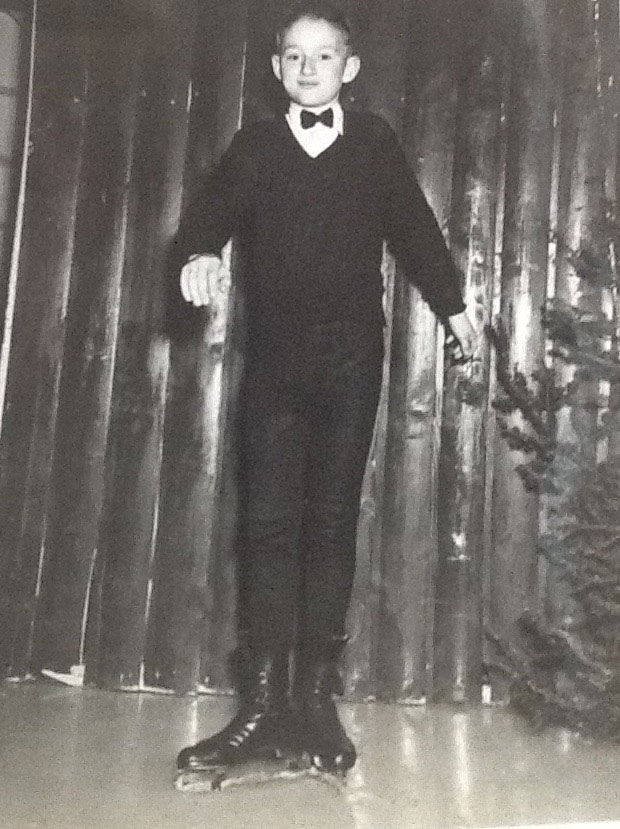
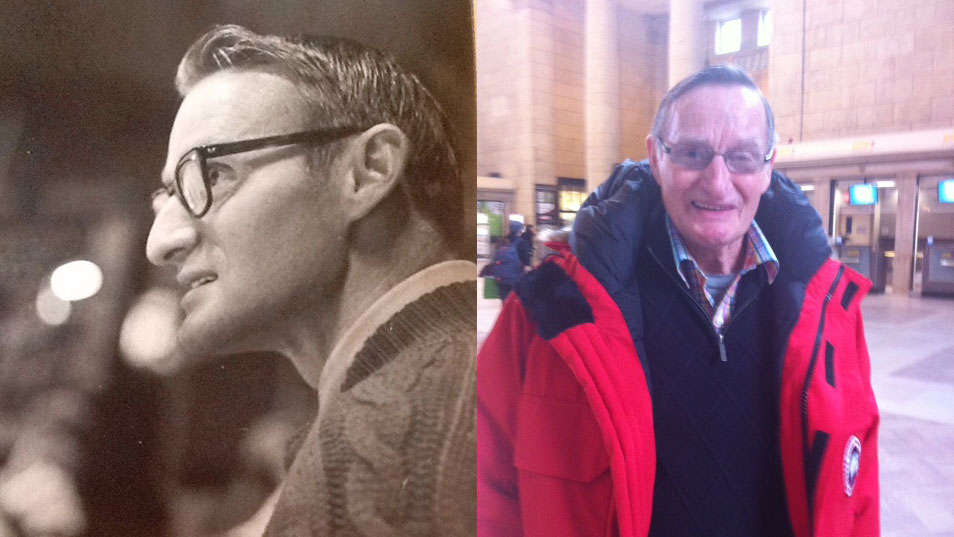
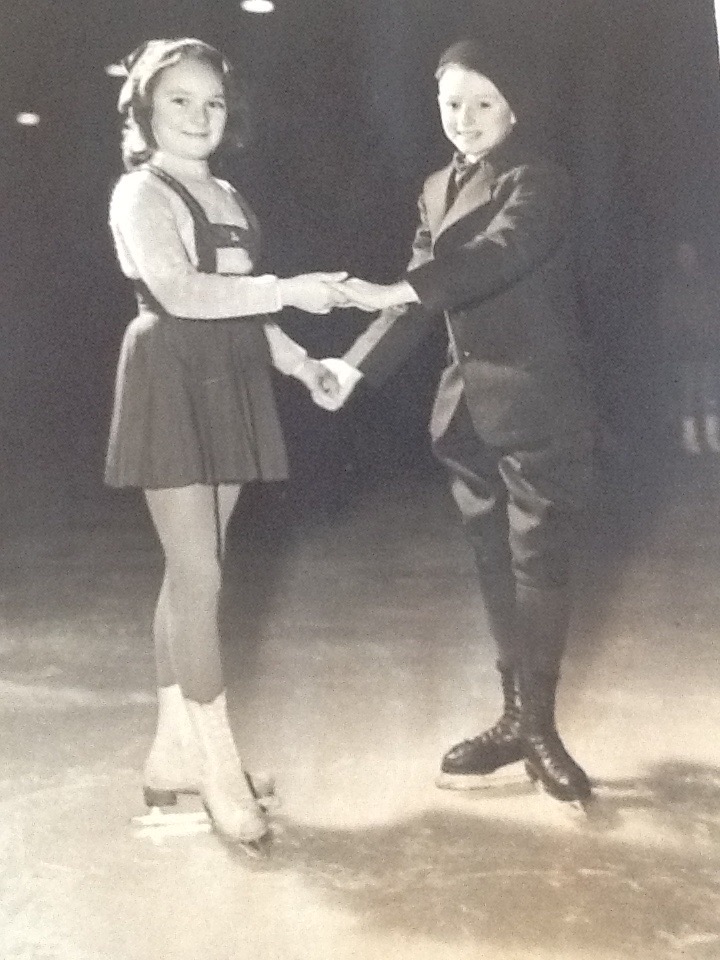
Paul Tatton then and now.

Paul Tatton then and now

It began as a way for a sickly child to get exercise but eventually turned into a life-long love affair with skating.

In the mid-1940s, Paul Tatton was 10 when he began skating at the North Bay Figure Skating Club. “I had been in bed with Pleurisy for over a year so naturally I wasn’t able to take part in active sports. Somehow I managed to pass my Preliminary Figure Test during my second season … and with that my love for skating was born.”

Young Paul Tatton.

Young Paul Tatton

His efforts in his first ice show never indicated the kind of career that lay ahead. “While Sonya Henie was the star of the show, I was a frog along with two other young boys. We were skating on natural ice in an inch of slush and carried on so much that when we took off our costumes, we were green all over – the dye didn’t come off for a week!”

From the beginning, it was a family commitment, his parents volunteering for every job at the club, his mom eventually becoming a gold test judge. “After my second year’, says Paul, “my father drove me all the way to Toronto to get a half hour lesson with Coach Gerry Blair. At the end of the lesson he told me that I could be as good as I wanted — he could show me what to do but the rest was up to me.”

When Paul arrived back in North Bay he informed his parents that he had to live away from home to get skating time. His parents agreed and the next day drove him to Copper Cliff, west of Sudbury, got him a room, arranged for meals at a boarding house and enrolled him in the Copper Cliff Skating Club. “I was 13 years old”, tells Paul, “and got up at 4am every morning, walked to get breakfast, then to the rink and skated from 5am to 8.30, then off to school. I trained there with Mr. Blair on weekends and practiced on my own during the week.”

Paul Tatton as a young boy.

Paul Tatton as a young boy

Paul admits that Gerry Blair took him under his wing and insured he had the things he needed to improve. “I had trouble with skating boots breaking down so Mr. Blair took me to see a friend of his, John Knebli. John made shoes for handicapped people. When shown my skates his immediate reply was ‘I CAN DO BETTER THAN THAT’! He took me back to his shop, measured my flat feet … and two weeks later I had the very first skating boots Mr. Knebli ever made. The rest is history.”

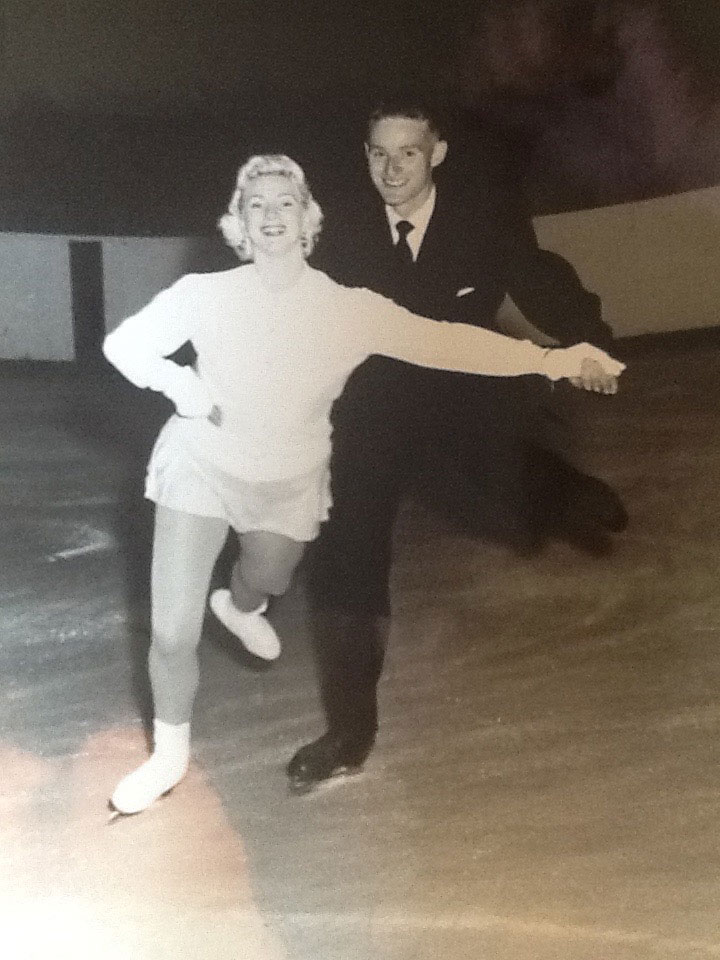
Under the guidance of Gerry Blair and later Sheldon Galbraith, Paul competed all the way to third place at Senior Canadians in 1954, finishing his free program despite experiencing an asthma attack part way through the performance. Returning home to skate in the official opening of North Bay Memorial Gardens, he knew his competitive career was at a turning point. Money was tight and with strict rules regarding amateur status, Paul felt he was almost forced to turn professional.

Paul Tatton pairs skating.

Paul Tatton pairs skating

“Arena manager Morris Snyder asked me to run a Spring School for him. He thought I might have a good turnout and of course, loving a challenge, I wanted to see if I could do it. It turned out to be a success with all high tests passing.”

That started Paul on his life’s work. “The transition to coaching was easy … I’m a tremendous planner … and not just in skating.” Whether it was learning to fly and getting his certification after one month, being scouted by the Chicago Blackhawks of the NHL or receiving a scholarship to develop his high tenor operatic voice in Italy, whatever Paul set his sights on, he did with determination.

Thankfully Paul’s dedication to coaching skating won out.

He worked in the US, most notably in Hershey, Pennsylvania, at Miami University in Oxford, Ohio as the Director of Skating and finally back in Canada in 1976 after which he started his own school in Sundridge, Ontario. “Today I work for Riverside Skating Club, Windsor Skating Club and La Salle Skating Club in Western Ontario.”

Wherever Paul landed, he discovered it was the science of skating that kept him challenged, particularly during school figures. “I loved to see what happened if I turned my head one way, not the other. I still love doing skating research and then seeing the effects … it’s fascinating … I never get bored.”

He’s sad figures are gone. “Figures taught you to concentrate. Learning quality turns, body control and the tracing of a perfect edge was a real art form. It was the great divider; today it’s often just acrobatics.”

One of Paul’s former students, Jen Jackson, now a coaching colleague, recalls her early days under Paul’s tutelage. “I have known Paul since 1987 when I first moved to Windsor and was looking for a coach to help me finish my gold tests. I chose him because when I came into the rink to watch, even though he wasn’t teaching the best skater on the ice, he gave her a lesson filled with enthusiasm. I could see his passion for the sport … and he never watched the clock.”

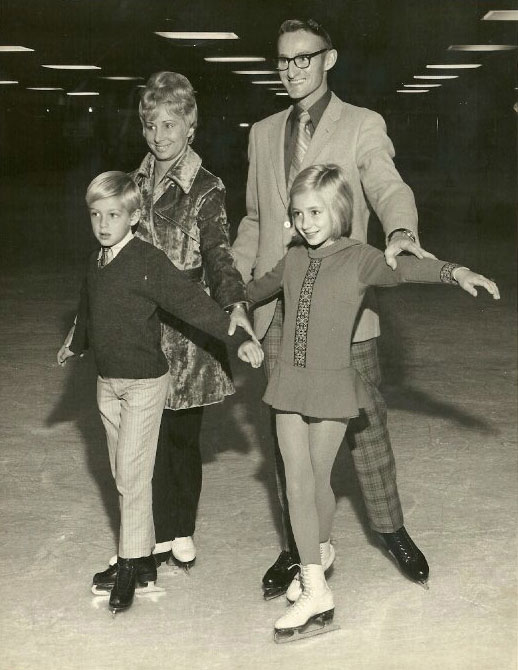
Paul Tatton coaching.

Paul Tatton coaching

Paul admits his priority has always been to instill confidence in the skaters he teaches. “I like to think that with each lesson I’ve accomplished something that will help them. You learn a lot about yourself in skating. You learn to face challenges that will benefit you for life. My coaches sure gave me confidence and for that I am grateful. Now it’s my job to pass that confidence on.”

In many ways, Jen has followed Paul’s teaching model. “When I began coaching, Paul was so generous and had me work with all his skaters. Now that he’s getting older, he’s stepping back, letting others take more leadership so he can work on specific areas with the skaters. He loves teaching turns and has become the Spin Doctor. The kids just love him. He always has a kind word or a story about the good old days and how each skater reminds him of someone wonderful he used to teach.”

Getting older has meant facing other challenges for Paul. Two years ago he had shoulder surgery and also broke his back, injuries which kept him off the ice for months.

As Jen says, it may have kept him out of the rink, but it did not curtail his enthusiasm. “When I would go to visit him, all he could talk about was how the kids were doing. He never complained about his situation and instead just kept telling me that he couldn’t wait to get back and hopefully by then he was still needed.”

Paul admits, “I’m proudest of the moments when I’ve helped kids do something they didn’t think they could do.”

Teaching from the boards, although Paul doesn’t put his skates on these days, he is as enthusiastic and involved as ever, this week attending the Annual General Meeting of Skate Canada Western Ontario and celebrating his 60th year of coaching.

Congratulations Paul!

Master Coach Sheldon Galbraith Leaves Lasting Legacy

Sheldon Galbraith’s funeral was anything but quiet and sombre.

Old friends by the numbers filed in and the chatter filled the room. The chatter became a din. It was like an old family reunion. Galbraith always had lots to say. So did his family and that includes folks who felt his big presence over the years.

Galbraith was just short of 93 when he died on April 14, and it was clear from all the gibber, that the life he had lived was full and meaningful to many. He was a man who was a game-changer, ahead of his time, with a big personality that radiated gloriously through glossy black-and-white photos of him skating shadow pairs in his early Ice Follies days with brother Murray.

Photos lined the room of Galbraith’s life: an incredibly handsome photo of him in naval uniform; Galbraith toting an enormous golf bag, with an amused look thrown back over his shoulder; Galbraith going deer hunting, or perhaps it was for moose (the bigger the game, the better); Galbraith in his familiar coaching uniform – long baggy coat, big galoshes, cap with floppy ear flaps pulled over his head – as he leaned over to inspect a compulsory figure; Galbraith with family, wife of 69 years, Jeanne and their four daughters and one son; Galbraith receiving the Order of Canada.

Galbraith’s list of accomplishments is long: coach of Barbara Ann Scott, winner of the first Canadian Winter Olympic gold medal in 1948; coach of world champions in three of the four skating disciplines; coach of Olympic champs Barbara Wagner and Bob Paul, the first Canadian pair to win this gold; two-time world champions Frances Dafoe and Norris Bowden, who also took Olympic silver; coach of 1962 world champion Donald Jackson, who became the first skater to land a triple Lutz in competition, coach of Vern Taylor, credited with the first triple Axel.

He also earned a string of awards: he was the first figure skating coach to be inducted into Canada’s Sports Hall of Fame (1980), and he’s also a member of the Canadian Olympic Hall of Fame (1990), the Canadian Figure Skating Hall of Fame (1991), the World Museum Hall of Fame in the United States (1996) and the Professional Skating Hall of Fame (2003). Galbraith, the first president of the Professional Skating Association in Canada, also received the Order of Canada and the Order of Ontario.

But reading between all of those lines is even more astonishing. Brian Foley, the Pied Piper of Canadian dance who also choreographed for Dorothy Hamill, Robin Cousins, John Curry and Toller Cranston, said he first set foot at the Toronto Cricket Skating and Curling Club in 1966, when he met Galbraith, then the head coach.

“I’ll never forget that first introduction with Sheldon,” Foley said. “He was, in his way, very polite in chastising me, that I was standing and teaching in his space.”

In a far corner of that space, Foley saw the many teaching tools Galbraith used to bring out the best in his skaters: “a homemade flying contraption,” Foley said. “Trampolines with crash mats. A few wooden poles. Some climbing apparatus and other paraphernalia that reminded me of an early Cirque du Soleil.”

And who could ever forget the video room? “I want to assure everybody that nobody was invited or allowed into that room,” Foley said. Well, international judge Jane Garden did. Galbraith showed her videos, taught her to see errors, made her a better judge. Later, he advocated for judges to pass on what they learned at skating events. Not only did he teach skaters. He taught judges.

Galbraith spent his life researching and developing his own philosophies, adapting his training as a flight instructor to figure skating. He made it all a science, but intuition worked too. Technique in figures, jumps and spins was all-important. He taught the science of momentum and balance and centre, which are elements that you need to do quality spins, Foley said. He researched the physical transfer of weight from edge to edge, carrying the weight appropriately over the ball of the foot. He measured the amount of velocity required in order to skate forward and backward with great flow.

If there is anybody who carries the Galbraith torch of technique, it is Gary Beacom, the master of the skate blade. “I am grateful that my most influential coach plumbed the depths of technique with such enlightenment and a sense of adventure,” Beacom said. “I credit my skating proficiency and capacity for innovation to decades of training the Galbraithian relationship of speed, curve, lean and rotation. Sheldon Galbraith advocated continuous harmonious motion using momentum and rhythm for both technical and artistic advantage.”

Beacom says he had Galbraith to thank for reviving the cross-foot spin as a compulsory program element during the mid-1970s. The cross-foot spin became Beacom’s signature move.

Casey Kelly, now an international judge, began to take lessons from Galbraith when her family moved back to Canada in 1973. She remembers his fairness and sense of equality. Cranston had a habit of drifting over the lines of the space allotted to him for training figures. He was working toward a world championship: Kelly was working on her third test. She would politely step aside for Cranston.

However, Galbraith told her: “Don’t you dare stop. You deserve to be here just as much as he does.” Kelly smacked into Cranston three times, before he finally moved back into his own space. “That was something I never forgot,” she said.

Donald Jackson also discovered Galbraith’s sense of fair play before he even began to work with him. Jackson had been training with Pierre Brunet in the United States, but Galbraith, the Canadian team coach, took over watch on Jackson during the 1960 Olympics when Brunet was too busy with other skaters.

Galbraith was the official coach of Wendy Griner at the time and the question became: who would take to the practice patch first? “It was always better to skate second, because the ice would be a little bit softer and more like the ice you were skating on when you skate in front of the judges,” Jackson said.

Jackson was astonished when Galbraith flipped a coin to determine who he would coach first. He could easily have saved the best patch for his own student. “That was just the type of man he was,” Jackson said. “Fair. Honest. It was what I really appreciated.” The next season, Jackson moved into Galbraith’s fold.

Galbraith changed the technique on all of Jackson’s jumps, laboriously. Then one day, he asked Jackson to do a double flip, which Jackson could do with his arms folded. But Galbraith told him to relax into a backspin position as he went up. “No problem,” thought Jackson, who promptly landed on his toes and fell, hard. Galbraith glided over and said: “I saw what I wanted to see. Don’t do it again.”

It was too late for Jackson to change that technique on a flip. But now, everybody does jumps with backspin technique. “Every time I see the skaters doing triples and quads, I think of what Mr. Galbraith developed for skating,” Jackson said. “And I think of my bruise, too. I guess I was the guinea pig.”

And yes, he was Mr. Galbraith to everybody. Hardly anybody ever called him Sheldon. Barbara Wagner said she called him Mr. Galbraith even as she became an adult. Kelly said her mother, Andra, never called him Sheldon, even though they’d sit next to each other at Hall of Fame functions, because of her husband, hockey great Red Kelly.

“He was a very special man who was way ahead of his time,” Wagner said.

World-class coaches work with Canada’s rising stars at Development Camp

Markham, ON – In one corner of the Angus Glen Community Centre Arena was Brian Orser, perhaps one of the most-sought coaches on the planet these days.

Just down the ice was Orser’s coach from his competitive days: Doug Leigh. Twenty-five sets of young eyes were transfixed on them at various times during the three-day development camp for Canada’s future rising stars.

Skate Canada started the development camp four years ago to target skaters that are potential candidates for the Junior Grand Prix circuit (no senior skaters here). Orser, Leigh, Tracy Wilson, Anne Schelter, Lee Barkell, Joanne McLeod and Yuka Sato all directed skaters aged 12 to 17, teaching them basic skating skills and edges, transitions, jumps, spins, all the goodies they’ll need in years to come.

It seems to be working. Skate Canada high performance director Michael Slipchuk says four of the girls who attended early camps have already been to a world championship, even an Olympics. Nam Nguyen and Roman Sadovsky were in that first group. Now both have moved into the top echelon of senior skaters in Canada, with Nguyen breaking the speed limit to be fifth at the world (senior) championships in March.

“It just shows us that we are targeting the right level of athlete,” Slipchuk said. “We want to have a better idea of our talent pool coming up. And it gives us a chance to see them in a training setting.”

It’s also a development camp for coaches, to hear and watch and see and take the torches that have been passed by others.

So there was Leigh, a coach for more than 40 years, the creator of Olympic silver medalists and world champions Orser and Elvis Stojko at the mighty Mariposa Skating School in Barrie, Ont. Leigh was carrying a torch, too, for he’d been coaches for a couple of years by coach-to-the-stars Sheldon Galbraith. “Everybody… has fingerprints on the person you become,” Leigh said.

On ice, Leigh was part teacher, part entertainer. He kept talking about “threads and strands” – the minute details that make the difference between success and landing on one’s butt. It was about control and balance, the placing of the free foot just so. He talked to girls about doing triple Axels. It’s clearly here. “Let’s get the party going,” he said. ”We’re not sitting on the park bench.” If you master these details, he proffered, “you will go to first class. If not, you’ll go to the cargo bin.” The result will be like an insurance policy.

His subjects grinned. “He’s so funny,” said Rachel Pettit, a 16-year-old from Whitehorse, Yukon, who is Canada’s reigning novice women’s champion, set to become a junior this season. She’s heard the points he made before, but “the way he explains it is so different, that you just think of it a whole new way,” she said. “He has a very cool way of teaching.”

Stephane Yvars, now head coach at the Boucherville Centre Elite, decided to train with Leigh as a competitive skater, but in 1993, he already had a long-term plan in mind: to learn about coaching skaters, too, from the best. “He’s really generous,” Yvars said. “He’s the most generous person I know. He gives everything,”

When Yvars was a skater himself, he had landed a triple Axel only once (at age 16) before injuries took over. He knew he needed one when he returned. “We spent a month on the back edge,” Yvars said. “He’s so patient.” Yvars arrived in April. By the end of May, he was doing triple Axels. “He’s a great mentor,” Yvars added. Every year now, he invites Leigh to give seminars at his club.

So out there on ice, Leigh was now working as a colleague alongside Orser. What is it like for him to watch Orser ascend to international coaching heights? “He asked me if he was allowed to call me grandfather,” Leigh said.

“He was a world champion, and he’s got an Olympic and world champion,” Leigh said. “It’s really cool. It’s the person that is left after you’ve done that chapter. And you watch them go onto the next chapter. And they are great coaches and they can step up and take on the world and doing a good job.”

Orser said he’s taken much of what he learned from Leigh as a coach to what he does now, although he’s evolved with the times. “Skating has changed and technique has changed,” he said.

The takeoff and flights of jumps are now different than in Orser’s day. “We used to say we’d climb up into the jumps,” Orser said. “We’d swing that free leg through, whether it was an Axel or a Salchow or even a toe loop. You’d bring that free leg and you’d climb like you were climbing a stair.”

Now the feet stay together more. Skaters get into the rotation sooner. “You’re still climbing, but you’re not climbing like you are stepping on a stair,” Orser said. “”If you are talking about quads, this is imperative. You have to start teaching it this way now. “

The beauty of Dartfish showed that Orser was one of the only people who could do the big step up into a triple Axel and still get 3 ½ rotations completed while he was a skater. He does not teach Axels the way he learned them.

Other things he learned from Leigh have been vital to his success as a coach. “He was the hardest working person in the rink, who was always the first one there and the last one to leave,” he said. “He stepped on every session on time and with lots of energy.

“And you can still see that in him, that fantastic energy, but that’s what you need to have in a centre, when you try to create a community of skating. You have to do it with enthusiasm and energy and excitement and everybody feeds off that.”

Over the past two years, Leigh has stepped back from the boards at the Mariposa Skating School that he founded and works now as more of a general manager. But he’s always willing to pass on what he knows and he finds the development camp “wonderful.”

“Coaches are the leaders of the next generation,” he said. “This is team building. It’s great to be a part of it. It’s fun watching everybody develop.”

2015 Skate Canada Development Camp Participants
Justine Brasseur, 14, Brossard, Que.

Edrian Celestino, 17, Dollard-des-Ormeaux, Que.

Antony Cheng, 17, Richmond Hill, Ont.

McKenna Colthorp, 14, Fort St. James, B.C.

Marjorie Comtois, 15, St-Hubert, Que.

Kim Decelles, 16, Quebec City, Que.

Cailey England, 17, Quesnel, B.C.

Gabriel Farand, 14, St-Antoine-Sur-Richelieu, Que.

Ajsha Gorman, 14, Kelowna, B.C.

Brian Le, 15, Delta, B.C.

Grace Lin, 14, Dollard-des-Ormeaux, Que.

Nicolas Nadeau, 17, Boisbriand, Que.

Conrad Orzel, 14, Woodbridge, Ont.

Rachel Pettitt, 16, Whitehorse, Y.T.

Joseph Phan, 13, Gatineau, Que.

Alicia Pineault, 15, Varennes, Que.

Triena Robinson, 15, Fort St. John, B.C.

Alison Schumacher, 12, Tecumseh, Ont.

Gabriel St-Jean, 15, Grand-Mère, Que.

Sarah Tamura, 14, Burnaby, B.C.

Amanda Tobin, 14, Burlington, Ont.

Bruce Waddell, 13, Toronto, Ont.

Semi Won, 13, Barrie, Ont.

Matthew Wright, 14, Waterloo, Ont.

Megan Yim, 13, Vancouver, B.C.

Tracy Wilson Brings Elite Skaters Back to the Basics

Tracy Wilson figures she learns as much as she teaches.

Yes, we all know she’s a crack skating analyst for various television networks, having won Gemini Awards for her work. But the former Olympic ice dancing medallist has quietly and behind the scenes fashioned a stellar career as a skating coach to some of the world’s best. Teaching all manner of skaters the true art of the blade, Wilson has become the wind beneath the wings of Olympic champions and world contenders.

And she’s done it through partnerships: Learning from other sports as she teaches their athletes. She’s deconstructed puzzles, and has come out on the other side with exercises and methods that seem to work wonderfully well. Several weeks ago, three of her students placed among the top five in the men’s event at the world championships in Shanghai: new world champ Javier Fernandez, Olympic champion Yuzuru Hanyu and the irrepressible Canadian champion Nam Nguyen who made believers out of many with his fifth-place finish at age 16.

Wilson’s exercises are a hybrid of many things, starting with what worked to make her and partner Rob McCall seven-time Canadian champions, three-time world bronze medalists, and the first Canadian ice dancers to win an Olympic medal (bronze in 1988.) She and McCall did foundation exercises every day as they trained. “It really helped us to find our balance, to create muscle memory so that we weren’t ever having to think,” Wilson said. “Our bodies just know how to maximize efficiency.”

After the death of McCall in 1991, Wilson didn’t skate for five years. She returned to the ice only because her children wanted to skate. Her oldest son, Shane, started playing hockey. Everything changed after a chance meeting with a hockey coach at a cocktail party. Wilson found herself telling him: “Guess what you guys need to do?” The coach asked her if she’d like to do it. Wilson said: “Sure.”

She worked with her son’s team from the time he was about seven or eight until he was in his mid-teens. Another son, Ryan also played hockey. “I just took my ice dance exercises and that’s what I did with these hockey players with music,” she said. She adapted the exercises to the needs of the players.

And of course, the needs were different. She learned that hockey players didn’t care how they looked on ice. They had no need for the pointed-toe thing. They cared about balance and speed and power. She quickly discovered that she had to always stay one step ahead of nine and 10-year-olds, and always tried to come up with new exercises.

“What I gained from them was a freedom,” she said. “It was really interesting to me.” And in turn, she brought that to her figure skating exercises. It’s great to have the correct technique, but best if you couple it with power and energy.

One day, son Shane was on the ice at the Toronto Cricket Skating and Curling Club because he had asked his mother to work with him. Intrigued, U.S. skaters Adam Rippon and Christina Gao, who were training in Toronto at the time, asked if they could train with him. “It was fabulous,” Wilson said. “They got on the ice and you could really see the difference. They were going for style over power. And I said: ‘Guys, just for fun, get in behind Shane. And always listen to his blade and forget about how you look. Just stay in there.’”

She and cohort Brian Orser have both honed in on what works to help different skaters. There is no set formula. When Wilson actually went back to coaching figure skating, her first students were astonishing: Chinese pair stars Xue Shen and Hongbo Zhao. Lori Nichol, who had been choreographing for them, sent them over to Wilson to tinker with their skating skills just as both Orser and Wilson had started at the club.

Together, they worked five hours the first day. Wilson took them right back to the basics. At the time, Yu Na Kim’s mother was in the rink, coming to work with choreographer David Wilson, and she asked if Wilson would work with her daughter.

“Sure,” Wilson said. “When?”

“Monday, Tuesday, Wednesday, Thursday, Friday,” she said. So Kim became Wilson’s second student. She had a whole year to work with Kim. Eventually, whatever Wilson could think up for her, Kim could do.

“If you haven’t really broken down the skating basics to their most simple form, you can’t build on top of it,” Wilson said. She had set Shen and Zhao right back to doing two-foot skating exercises, called bubbles (feet go in and out together), and it was to teach them knee action and balance. They spent about 30 to 40 minutes on the first exercises and then moved to inside edges.

“I just knew if I was going to do for them what they needed, we had to start from the very beginning and I didn’t know any other way,” Wilson said. Later she called Nichol and told her she was going to apologize in advance for frustrating Zhao in particular. Nichol said on the contrary: they had loved it and wanted to do it every day. They trained with Wilson for 10 days in a row.

Last spring, Zhao, now a coach, sent three of his pair teams to Wilson so that she could work with them in the same way. They are the same exercises that Wilson and Orser use to teach beginner skaters and adults.

Wilson has also developed off-ice training over the years, too. She herself had worked Pilates, and dance on the floor and adapted some of those exercises onto the ice. “You can be very creative once you have the basics and see how the principles follow through at all levels,” she said.

Most importantly, in the beginning, Wilson wasn’t sure – coming from an ice dance perspective – if what she was doing was what a single skater or a hockey player, or a synchro skater needs.

“But you know what?” she said. “It is. It’s the same.” Yes, partnerships and cross-discipline learning works.

Thank You to the Greatest Volunteers in Skating

How Judges Decide Who Takes Home Synchro Gold

The four S’s – synchronization, spacing, speed and strength – were on championship display at the 2015 ISU World Synchronized Skating Championships at FirstOntario Place in Hamilton, Ontario on Friday, April 10 and Saturday, April 11th. Relive the short and free program performances from the world’s premier synchronized skating teams, including the gold medal performances from Canada’s NEXXICE of Burlington, Ontario.

Read below to learn how the judges determined who deserved to take home the gold medal.

Synchronized Skating – The Secret Weapon

After slightly more than 30 years as an official discipline, synchronized skating is still relatively unknown outside the circle of skating. With the world’s best synchronized skating teams competing for the global title in Hamilton in April, the sport is quickly finding its place in the spotlight … and hopefully someday soon into the Olympic Games.

Skating fans have been so entrenched in the traditional disciplines of singles, pairs and ice dance that it has taken time for this fifth on-ice member of the skating family to gain recognition and credibility. Thanks in part to huge interest here at home, Canada has been a giant force in helping develop synchronized skating and bringing it to the international stage.

So what exactly is “synchro” and how does it differ from the other forms of skating we already know and love?

Think team skating.

With teams of eight to twenty skaters on the ice performing fast-paced and intricate moves side-by-side at the same time, the sport requires nerves of steel, adaptability, control, confidence and teamwork. Just like in other skating disciplines, speed, power, edge work, skating skills and choreography are important but so are additional technical elements like accuracy of formations (see below), transitions, and precision of movement within the team. Consider how difficult all those goals are to achieve with only two people on the ice in pairs and dance, then add in additional skaters and more hard stuff to do … and you’ll have a much clearer idea what the sport is all about, why it’s so difficult and why it’s growing in popularity around the world.

Many involved countries have their own version of a synchro program which starts with introducing young skaters to the experience and benefits of belonging to this specialized area of the sport. As part of a team, every skater can enjoy the thrill of competition and the success that comes from participating. But be warned! Like skating anywhere, once the synchro bug gets hold, what may start out simply as wanting to learn to skate for fun can become seriously competitive!

To attract members, Canada’s synchro program starts early through a gamut of stages of expertise, Beginner through various levels to Junior, Senior and Adult, each one based to some extent on age and ability. Teams may form merely for fun and recreation, like for an appearance in an ice show, or they may take a more serious route with competitive goals, auditions, fund-raising, long-range commitment and extensive training on and off the ice.

To align high level synchro competition with other skating events, junior and senior teams must compete in short and free programs, each with required elements to ensure a well-balanced program. Performances are judged using the International Judging System where the Technical Score is based on the difficulty of the element and the quality of its execution, and the Program Components score reflecting the quality of skating skills, performance, choreography, transitions and musical interpretation.

Sound familiar?

As similar as the structure of these events may be to traditional competition, you won’t see triple jumps or complicated spins during synchro … or at least not yet. Although these elements will likely come to the sport eventually, what you will see today is some of the most technically demanding skating and creative choreography on the planet.

In synchro, keeping in mind that every element should be skated in unison with speed, power and control and with maximum ice coverage, here are the basic formations to look for.

Line: one line, parallel lines or diagonal lines

Block: a rectangular formation with a minimum of three parallel lines covering the length of the ice with lines close together and skaters evenly spaced

Circle: a consistently round shape rotating for at least 360°, skaters evenly spaced with no pulling or tugging between individuals

Spin: solo spins performed in unison with a minimum of 3 revolutions

Intersection: one half of the team intersects individually with the other half

Wheel: formation must rotate at least 360° where all skaters rotate around a common point, like spokes of a wheel

Group Lift: two or more skaters will lift one or more skaters to any height and set them back down

Creative: innovative movements, free skating elements or moves that reflect the music, performed individually, as pairs or as groups

Moves: a flowing sequence of at least 3 different skating movements, e.g. spirals, Bauers, spread eagles, etc. skated with strong edges and linking steps

No Holds: similar to a block formation except the skaters are not connected – team must hold the block of 4 or 5 lines and maintain spacing while skating turns and linking steps in unison over the entire length/diagonal of the ice surface

The first step to enjoying synchro is being able to ID the above formations. Once you have a taste for those, next you’ll want to ask yourself the following questions to determine the quality and difficulty of the move.

  • Is every skater doing exactly the same thing during formations?
  • Are skaters close together and equidistant from one another? (Closer is much harder!)
  • Do elements appear easy and comfortable without pushing or pulling (tension) between skaters?
  • Are the formations clear and accurate?
  • Are they held for the required amount of time or ice coverage?
  • Are the transitions between moves seamless?
  • Are lines straight?
  • Is the performance skated smoothly and with confidence?
  • Has any element been made more difficult by the addition of footwork, changes of direction, pivoting or by choreography that makes the element harder to skate well or the formation harder to hold?

There you go … now you have the basics.

While the athletes test their skills … with these guidelines … now you can test yours too.

Skate Canada Celebrates National Officials Day

Happy National Officials Day to all our Skate Canada volunteer officials!

Today we celebrate and honour the contributions of our dedicated and passionate officials all across the country. From the grassroots to Olympic level, officials provide the backbone for our sport in all disciplines. As judges, referees, data specialists, evaluators, technical specialists and controllers, our officials support the participation of all skaters through test days, competitions, monitoring sessions, workshops and much more!

Why does one become an official? What does it take to be a successful official? How do I get involved? These are some of the questions that may come to the mind of anyone with an interest in the sport (skater, coach, parent, etc.) so we have reached out to some of our current officials from across the country to collect a brief snapshot of their journey as officials to share with you all.

Richard ValleeNO Section, Judge/Evaluator (Officiating for nearly 40 years)
Deciding to conclude my coaching activities, yet wanting to stay involved in the sport, it was suggested that I consider joining the judging ranks. My mother, a low test judge, encouraged me to continue to pursue this avenue which would eventually assist our local skating club by defraying future costs of importing judges for test sessions. I began the educational aspect by reviewing judging materials and attending test sessions to learn as much as possible. As I advanced through the test levels, Norm Carscallen, an International judge from Sudbury, Ontario who had judged several of my skating tests served as my mentor, encouraging me to progress through the ranks.

Advancing through the competitive levels resulted in involvement in related activities such as sectional and national committee work, facilitating clinics and seminars, and monitoring skaters.

As a competitive judge, I was fortunate to reach Canadian and international status with the guidance of several highly esteemed officials: Jane Garden, Joyce Hisey, and in particular Jean Mathews and Elizabeth Clark. As I reflect on my nearly 40 years as a Skate Canada official, I believe that it is extremely important for judges to share their knowledge, expertise, and experience in order to assist others in attaining their goals. My life has been enriched through the wonderful judging experiences, lifelong friendships, and the immense satisfaction I have received from working with parents, coaches, volunteers, and in particular, the skaters.

Lyse PrendergastBC/YK Section, Data Specialist (Officiating since 2013)
After many years of involvement in figure skating, beginning as a skater myself and later as a parent, club volunteer, board member and then club administrator, I decided to continue my participation in the sport by beginning training to become a data specialist about two years ago. It has been a great experience so far. It’s given me a way to stay involved in skating while really challenging myself and developing new skills and knowledge. As well as learning the particulars of the data specialist role, I have enjoyed learning more about the sport itself, and continuing my connection with the skaters, coaches and officials I’ve come to know over my years as a club volunteer and staff member. We have a great team of data specialists in BC and the mentoring I’ve received from people like Sharon Dahl, Lorraine Mapoles and Wayne Sutherland has been incredible. For data specialists, the competition hours are often long and demanding, and sometimes punctuated with challenging technical crises, but I really enjoy being part of a team where everyone is dedicated to the sport, works hard and looks out for each other, and pulls together when needed.

Chelsey SchaffelAB/NT/NU, Synchronized Skating Technical Specialist/Technical Controller/Judge (Officiating since 2006)
I was always quite analytical about synchro programs that I skated, and that I watched, so I was very interested in the technical specialist role when the new judging system was introduced. I was invited to attend the technical specialist training seminar right around the time I could start to see my career as a skater winding down due to cost, injuries, and other life commitments. I passed the exam, and though I competed for two more seasons, I was also given opportunities to officiate and discovered that I enjoyed it immensely. Being able to continue skating and test the waters of officiating at the same time made the transition away from competing much easier, and I found the technical specialist role was a great fit because I still got to work in a team environment, which was what had drawn me to synchro (“precision” when I started!) in the first place.

I love educating coaches and skaters, and giving teams feedback. Judging criteria and processes seemed very mysterious when I first started competing, and I feel the CPC judging system really fosters dialogue between officials and competitors. It’s very rewarding to see your words have a positive impact on a team’s development.

Being an official is a bigger time commitment and involves more hard work than most people probably realize, but it’s also much more rewarding than I ever anticipated. Having the best seat in the house at competitions is an obvious perk, but I also get to learn and teach, travel, meet people from all over the world who love to talk about synchro as much as I do, and stay involved in an amazing sport. The experiences I had as a synchro skater have had a positive impact on so many areas of my life, and I know that by volunteering my time, I am giving other skaters the chance to have those experiences too.

Benoît LavoieQC Section, Judge/ Technical Controller (Officiating since 1982)
As a beginner I was dreaming about Olympics. I was a huge fan of the Olympic movement since I was a young boy. I was quite realistic as an athlete even when I competed at the senior national level. I wanted to stay involved after my skating career and when an accelerated program was created to train new officials I became involved that way in 1982. Being an official has allowed me to stay active and accurate with the technical rules, and also stay involved somehow with athletes and the skating family who have given me so much for so many years.

I would recommend becoming an official because it’s the best seat in the house at events, best second family to contribute as a volunteer and best sport organization in the world.

Many people have contributed to my desire to become a better official; Sally Rehorick inspired me at first at a skating conference. Eva Finlay was my mentor through all my levels up to senior. Debbie Islam was a role model for me to become an international official.

I have several favourite officiating moments but I guess one of the best would be having the privilege to judge at the Olympic Winter Games in 2002 when Salé and Pelletier won Gold through adversity. I felt I contributed in a special way and for the credibility of our sport and the respect of the Olympic values, I had so much pride.

Nancy BrayNS Section, STAR 1-4 Judge (Officiating since 2014)
I decided to become an official for a number of reasons, one of them was to give back to a sport that gave me so much. Figure skating taught me the value of never giving up and instilled in me a solid fitness foundation, which I carry with me today. I also became an official to stay actively involved in the sport. As a new mother, I don’t have the time that coaching would demand. Being an official offers me more flexibility, allows me to enjoy watching the skaters develop and at the same time builds my own knowledge about the sport. It’s a win-win situation; I can give back to the sport I love and do something positive for myself that fits easily into my busy schedule.

Do you have a love for the sport of figure skating? Do you want to learn more about the sport and join a team of passionate and dedicated individuals?

Whether you have experience as a skater yourself, or have put in extensive time at the rink as a skating fan or parent, there is an officiating opportunity available for you! To learn more about developmental officiating opportunities, please contact your section office: http://www.sc3staging.skatecanada.ca/skating-programs/section-offices-skate/